

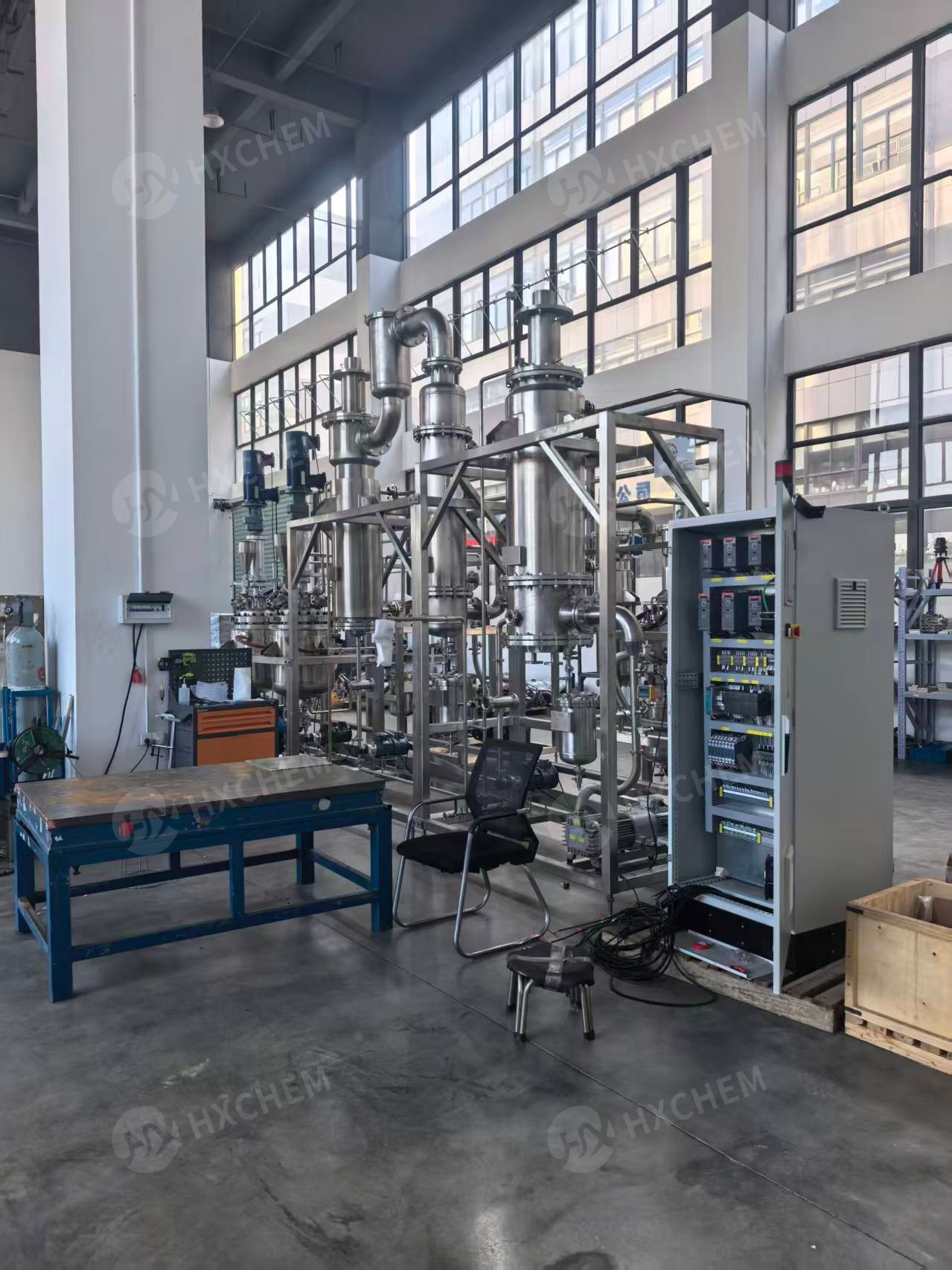
Polymerization and Devolarilization Unit
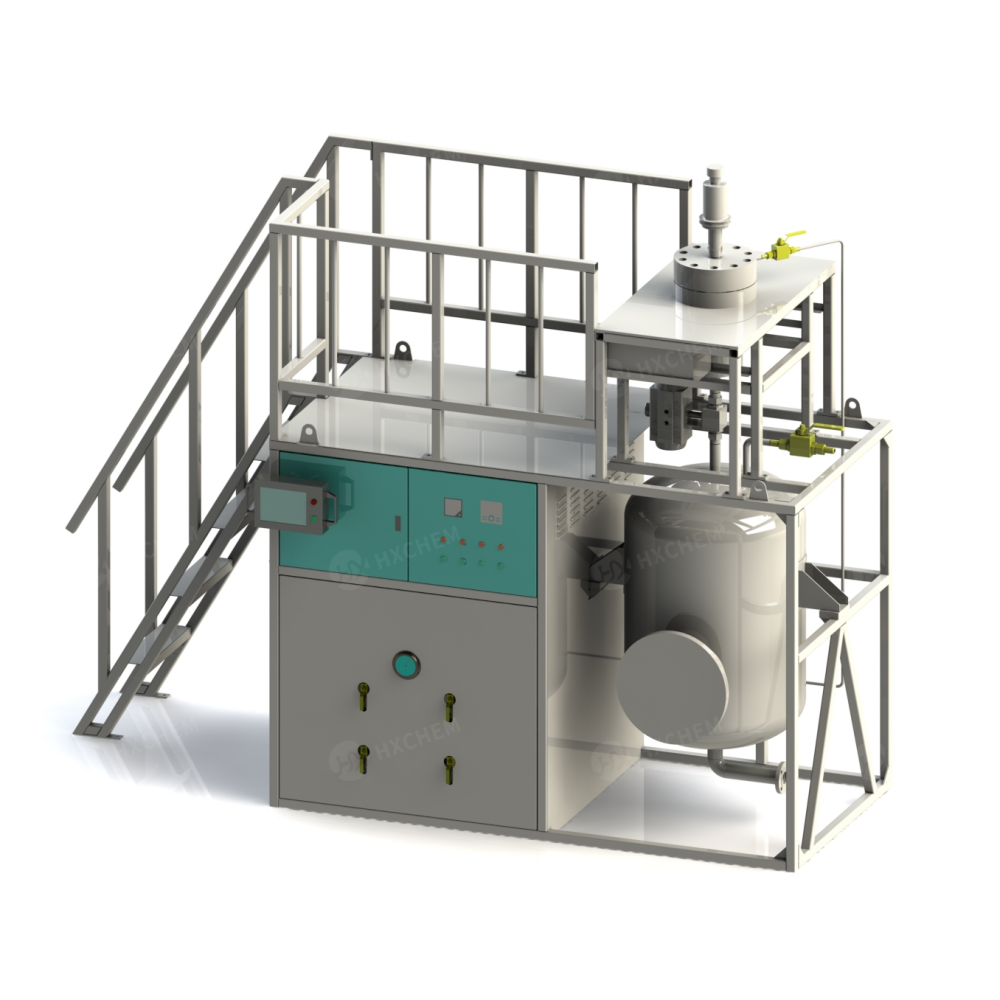
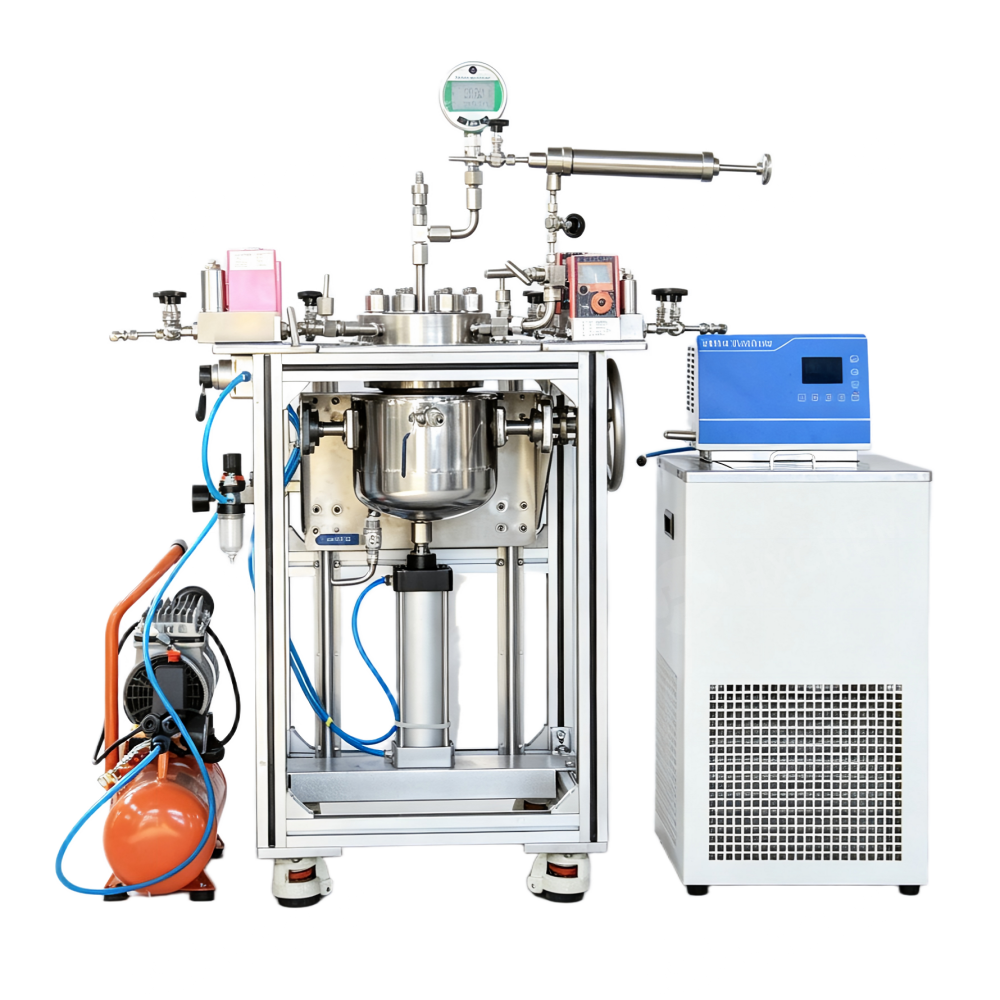
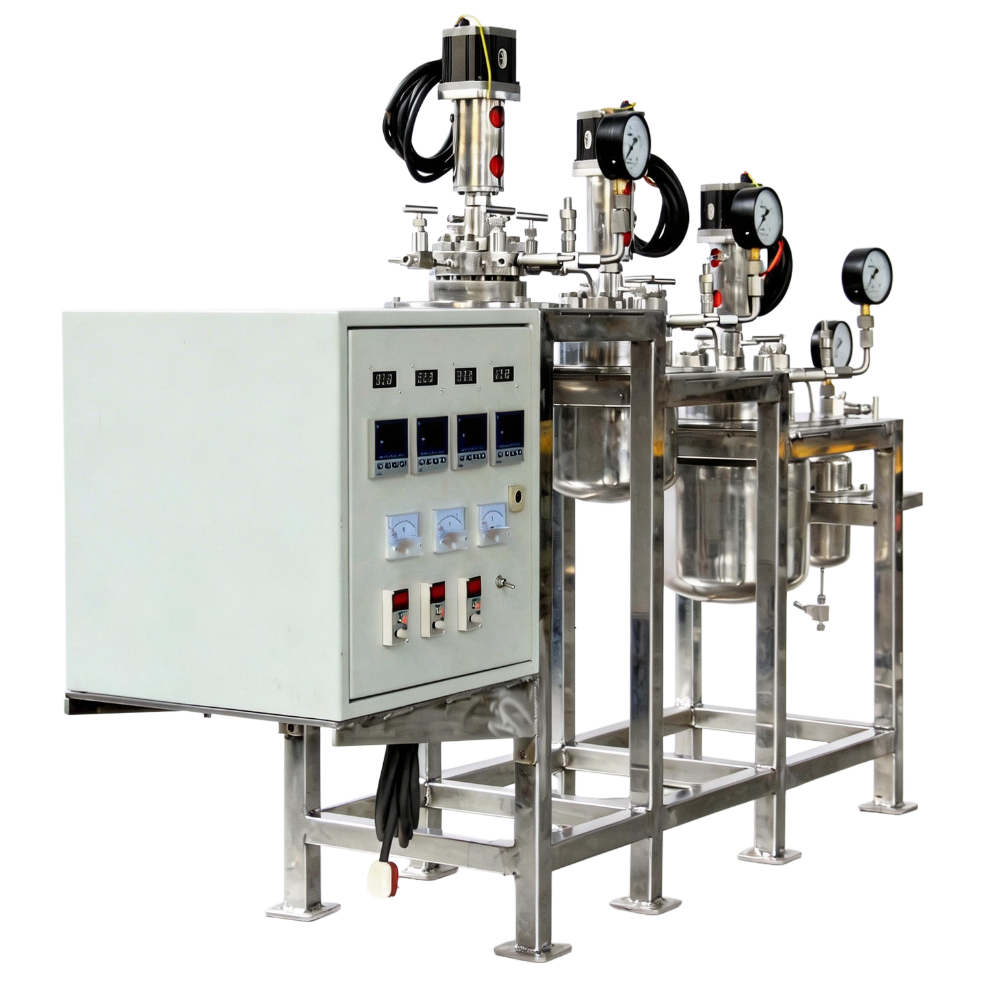
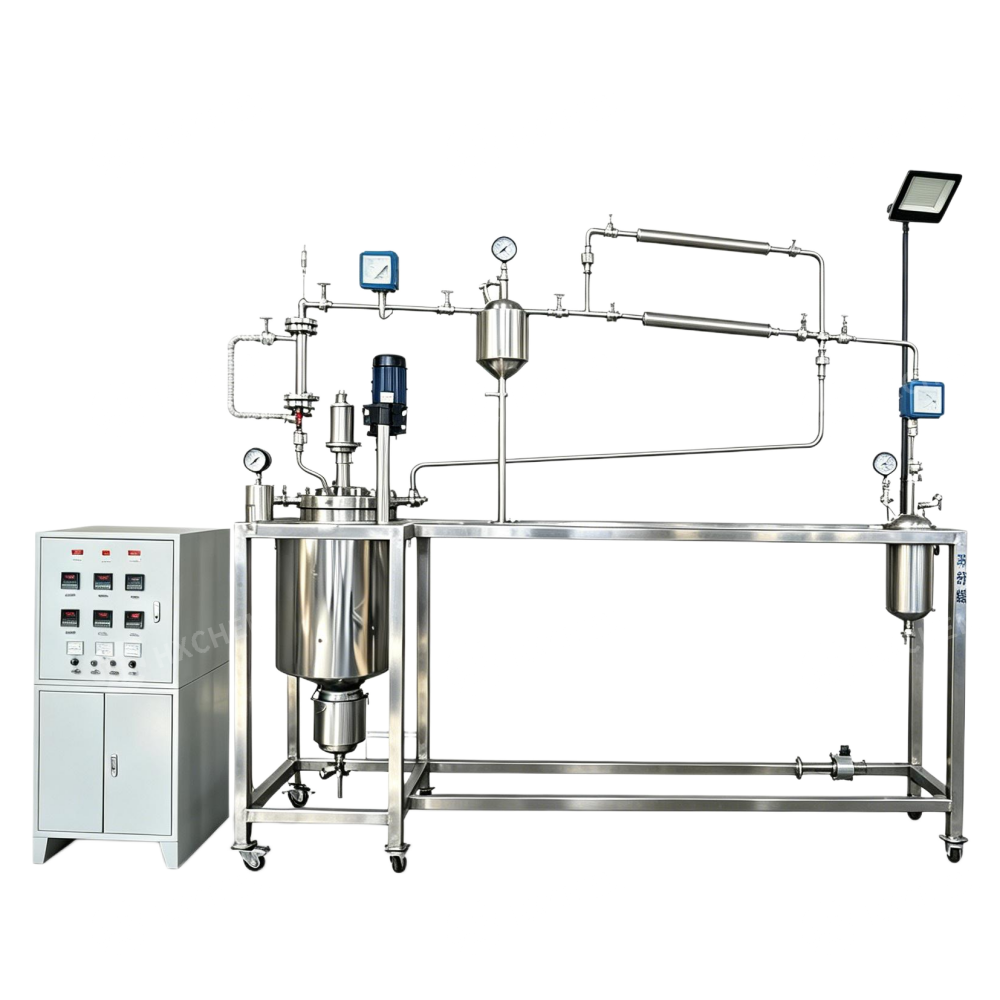
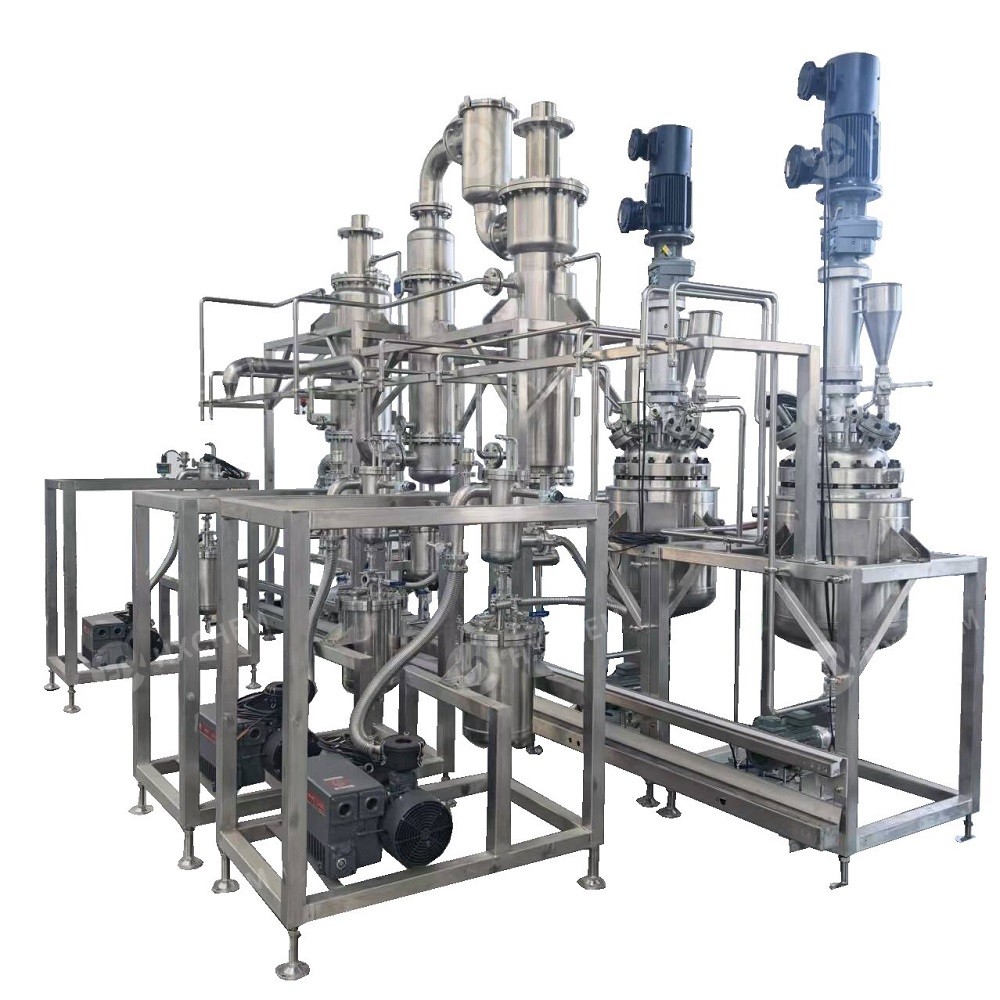
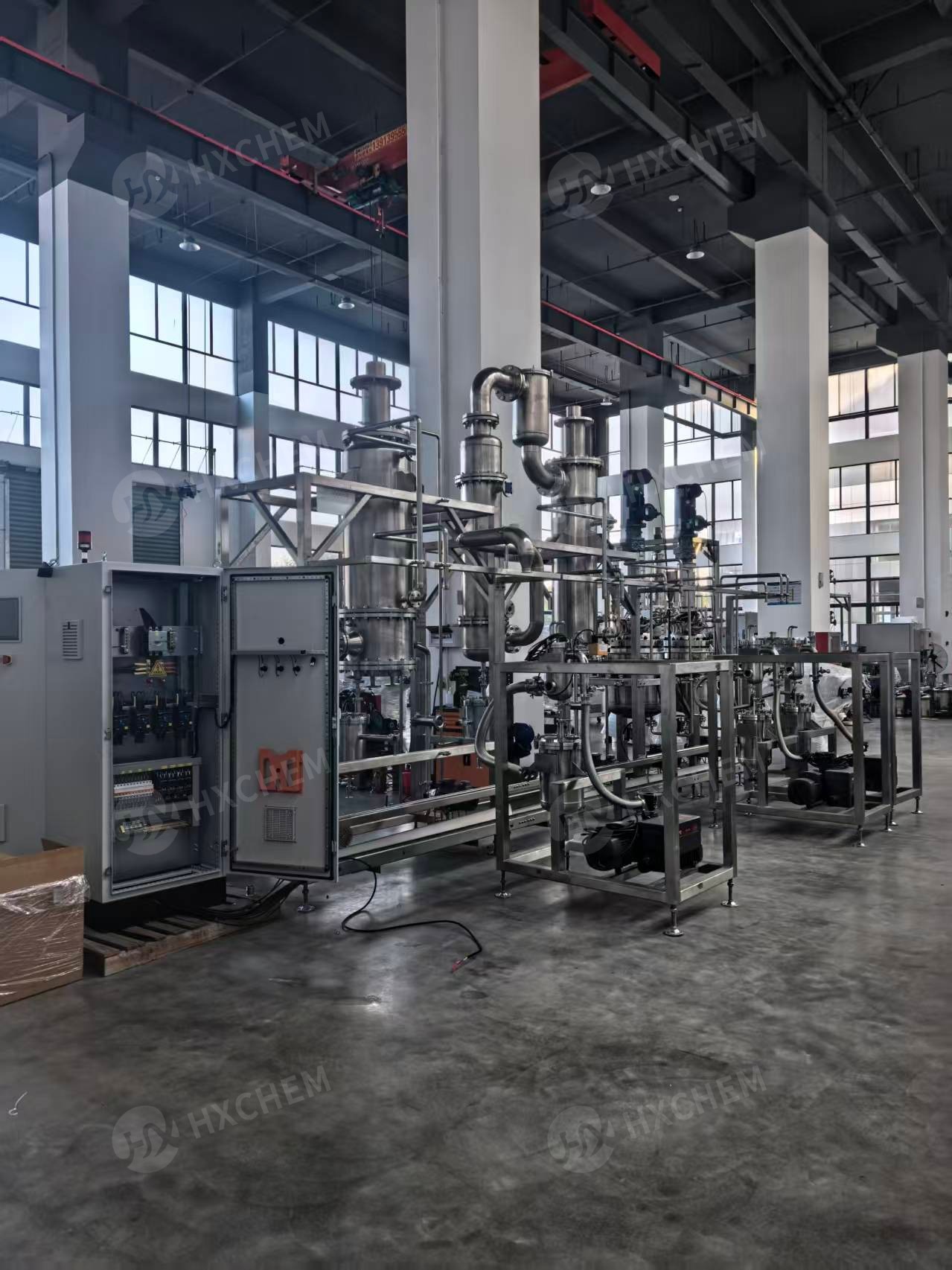
Polymerization and Devolarilization Unit including feeding, 50L polymerization reactor, wiped film short path evaporator, thin film evaporator, falling film evaporator
- HXCHEM
- China
- 80 days after payment
- 10 sets/month
Details
Polymerization and Devolarilization Unit
INTRODUCTION
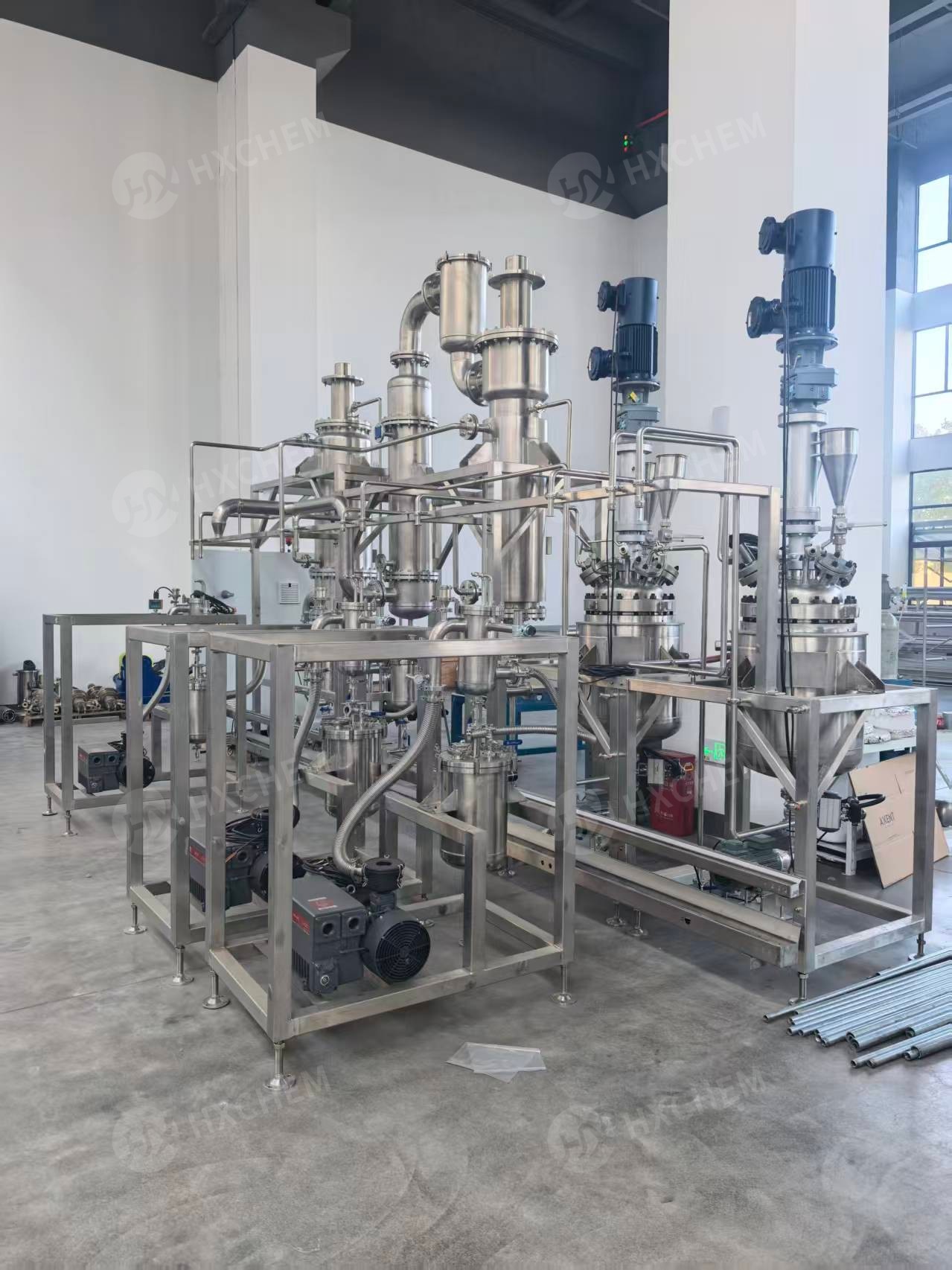
This is one design for a polymer production line, featuring a flexible devolatilization section capable of handling a wide viscosity range (50 cP to 200,000 cP), along with a centralized PLC control system.
1. Process Flow Description
The process consists of three main stages: Polymerization, Intermediate Storage, and Devolatilization.
Polymerization:
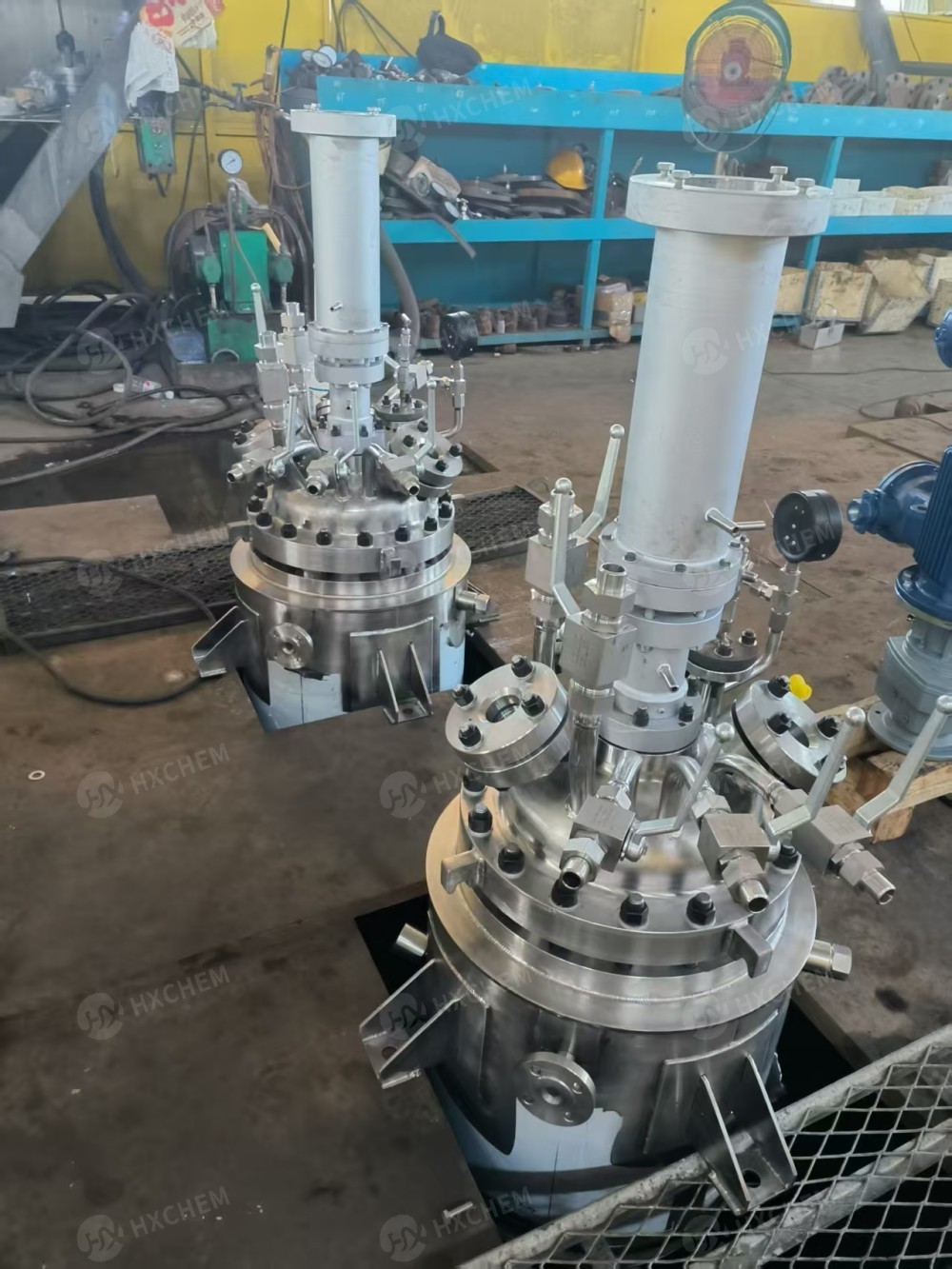
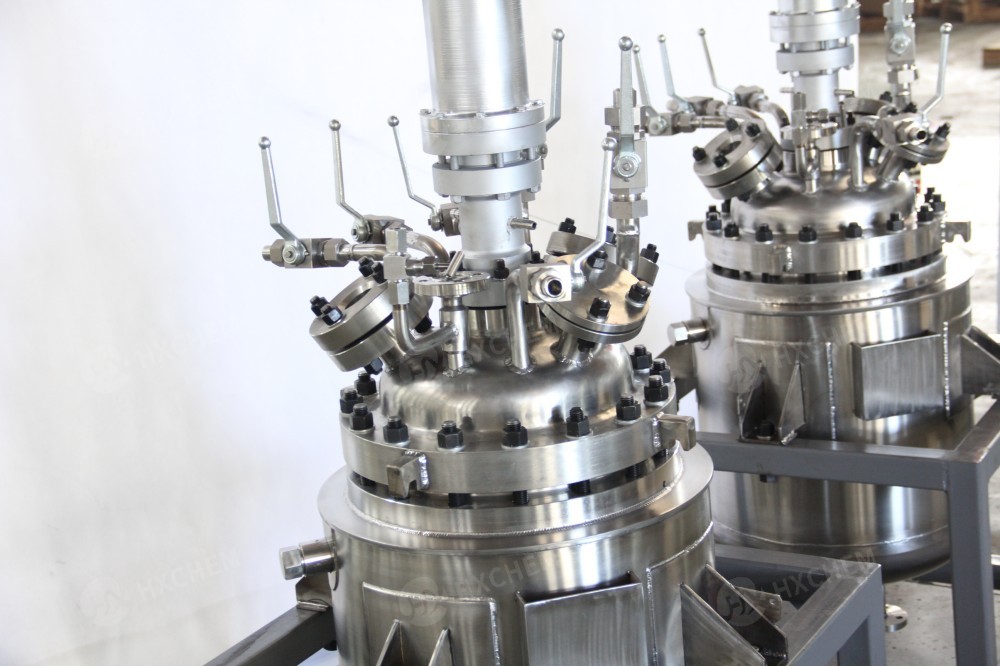
Raw materials are polymerized in the Polymerization Autoclave (R-101) .
Additives: Two liquid additives are fed via 2L graduated funnels with dual funnels for precise dosing.
Inerting: Nitrogen is introduced through a top-mounted dip tube (Ø15 mm, positioned above the liquid level to avoid disturbance) and through bottom/lower wall sparging rings for agitation and stripping.
Operating Conditions: Temperature of 240°C, pressure range of -0.1 to 0.5 MPa.
Intermediate Storage:
The finished polymer from the autoclave is transferred by a pump (high-viscosity gear pump) to the Intermediate Vessel (R-102) .
This vessel has the same configuration as the autoclave (stirrer, nitrogen sparging, heating jacket) but lacks the raw material/ additive inlets. It serves as a buffer and pre-stripper.
Devolatilization:
Polymer from the intermediate vessel is pumped into a flexible Devolatilization (Devap) Skid. The system allows for series or parallel operation of the units.
Equipment: Thin Film Evaporator (WFE), Short Path Evaporator (SPE), and a Falling Film Evaporator (FFE).
Configuration Flexibility:
Series Mode A: WFE $\rightarrow$ SPE $\rightarrow$ FFE.
Series Mode B: FFE $\rightarrow$ SPE.
Parallel Mode: Material is split between the (WFE or FFE) and the SPE.
Operating Conditions: Temperature of 260°C, pressure range of -0.1 to 0.1 MPa (high vacuum for SPE).
Product Collection:
The devolatilized polymer (now with minimal volatiles) is discharged into the Product Storage Tank (T-103) .
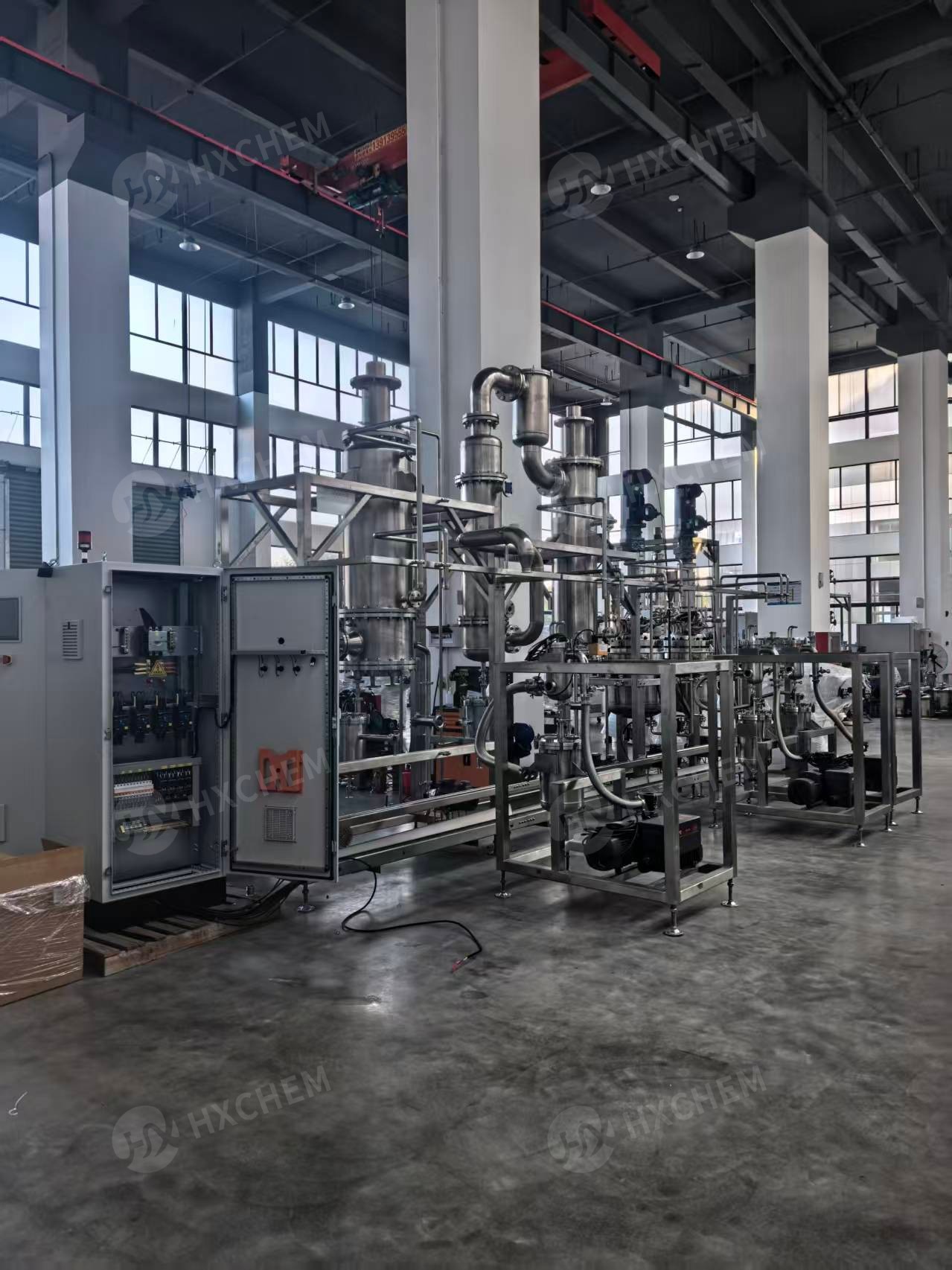
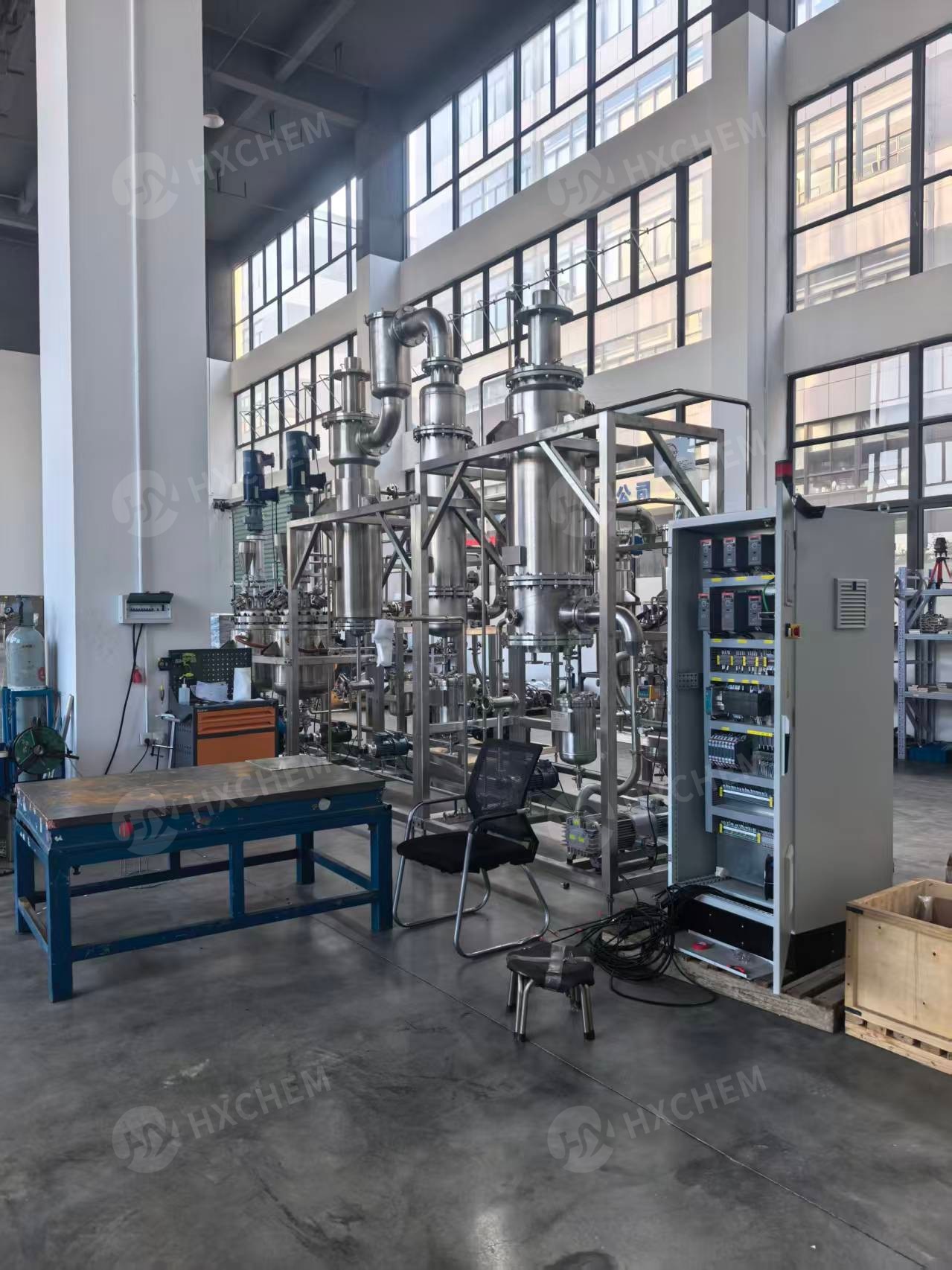
Handling viscosities from 50 cP to 200,000 cP requires specialized equipment:
Polymerization Reactors (R-101 & R-102):
Volume: 50liters, Vacuum - 5bar
Agitator: For high viscosity, a helical ribbon impeller with Variable Frequency Drive (VFD) is essential to ensure bulk motion and heat transfer.
Sparging: Nitrogen sparging rings at the bottom and side wall help in stripping and reduce wall deposition.
Heating: Thermal oil system for precise temperature control at 240°C.
Devolatilizers:
Thin Film Evaporator (WFE): Fitted with a hinged or fixed wiper system to maintain a consistent thin film even at high viscosities.
Short Path Evaporator (SPE): Essential for the ultra-high viscosity range. Its design minimizes pressure drop and residence time.
Falling Film Evaporator (FFE): Best suited for the lower end of the viscosity spectrum (<1000 cP). In high-viscosity operation, it may be bypassed or used as a final polisher in series.
Piping: All lines between units must be jacketed and traced with thermal oil at 260°C and have large diameters to reduce pressure drop.