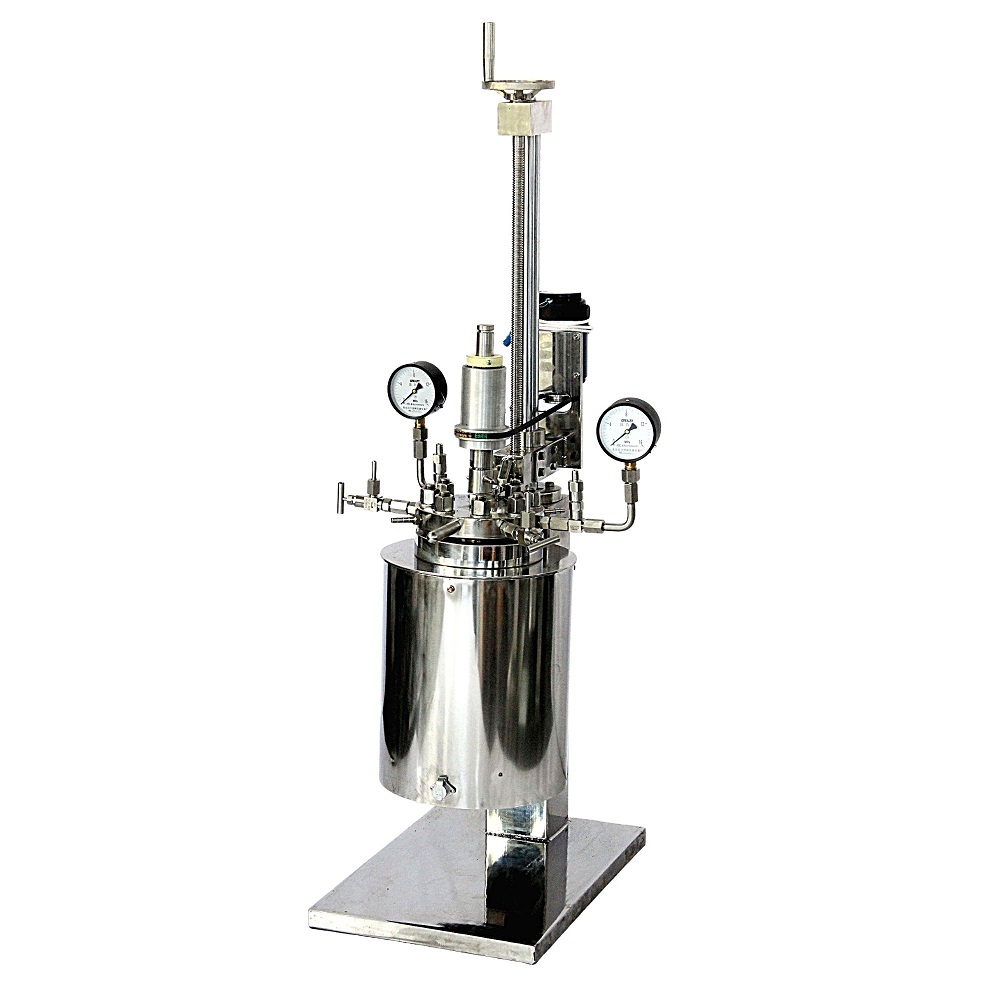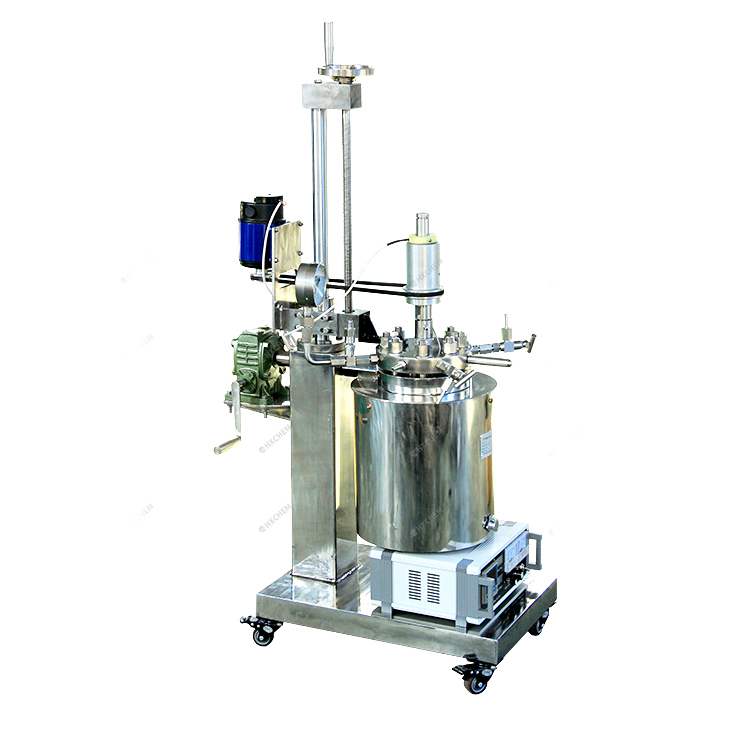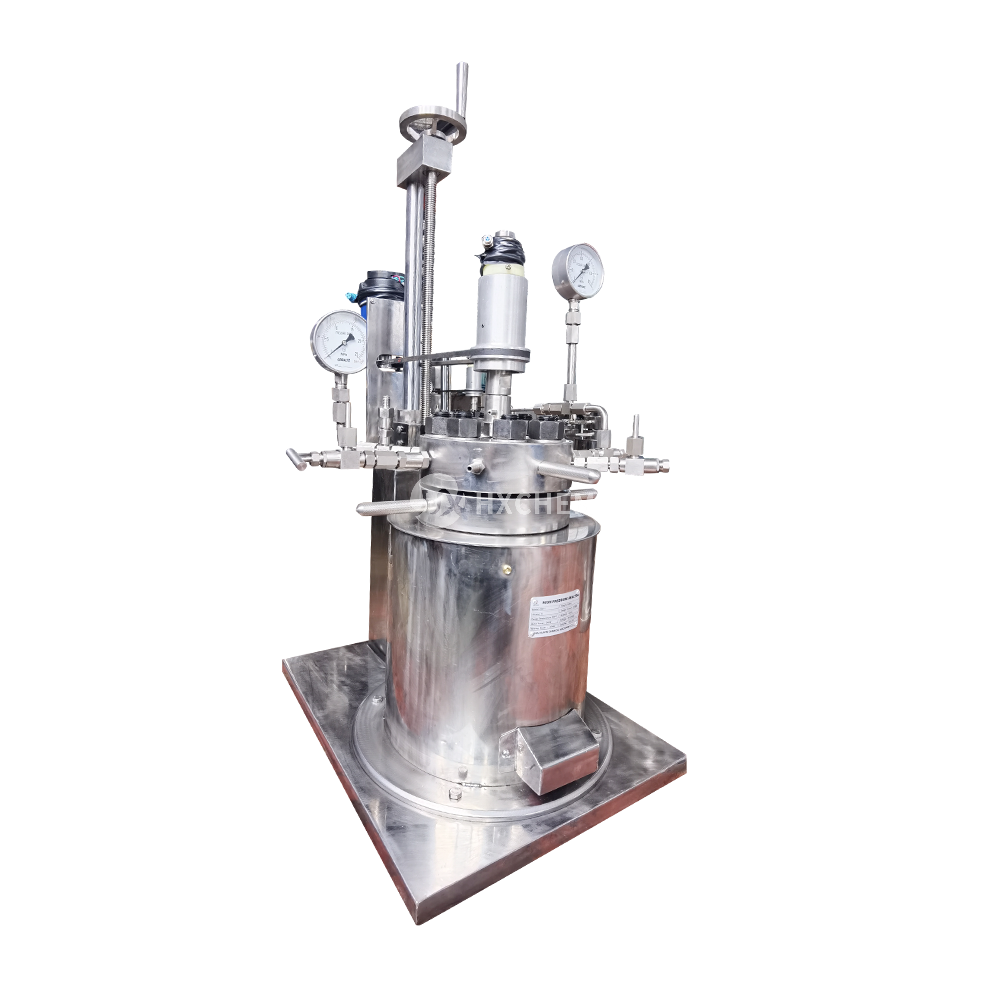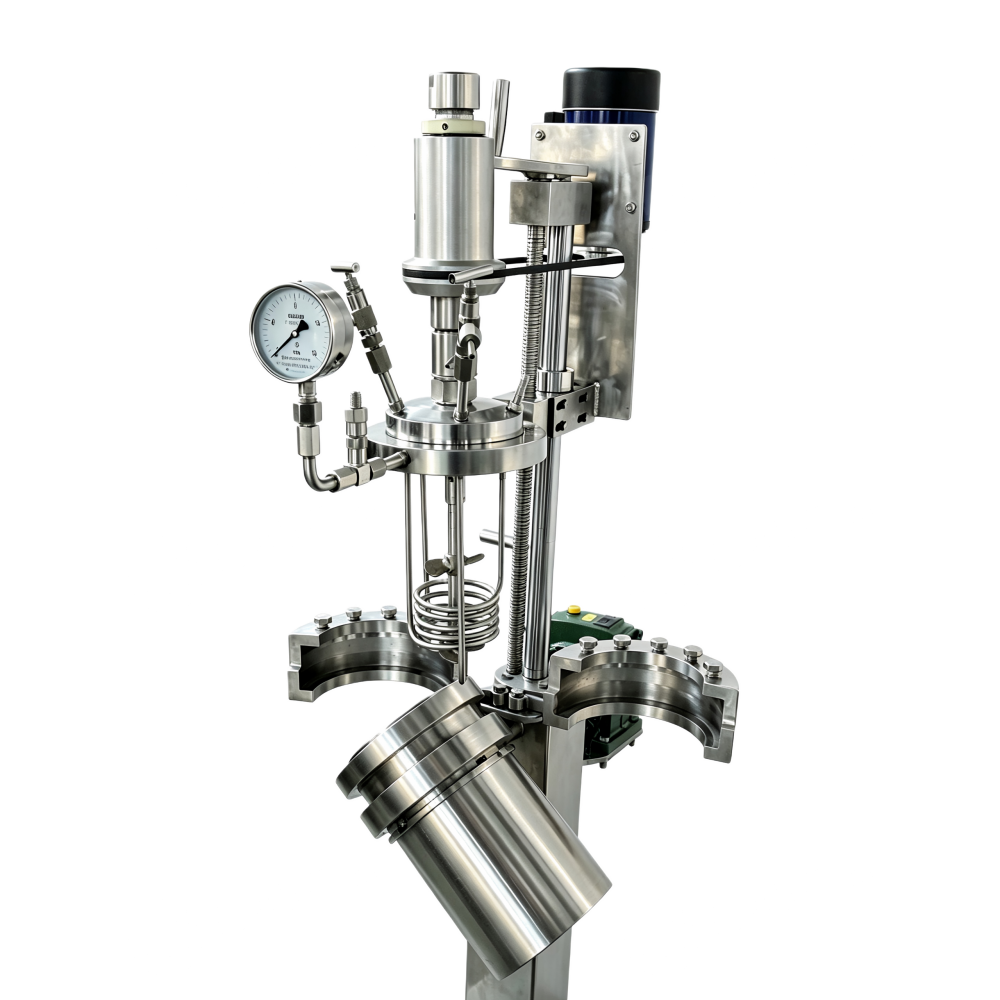


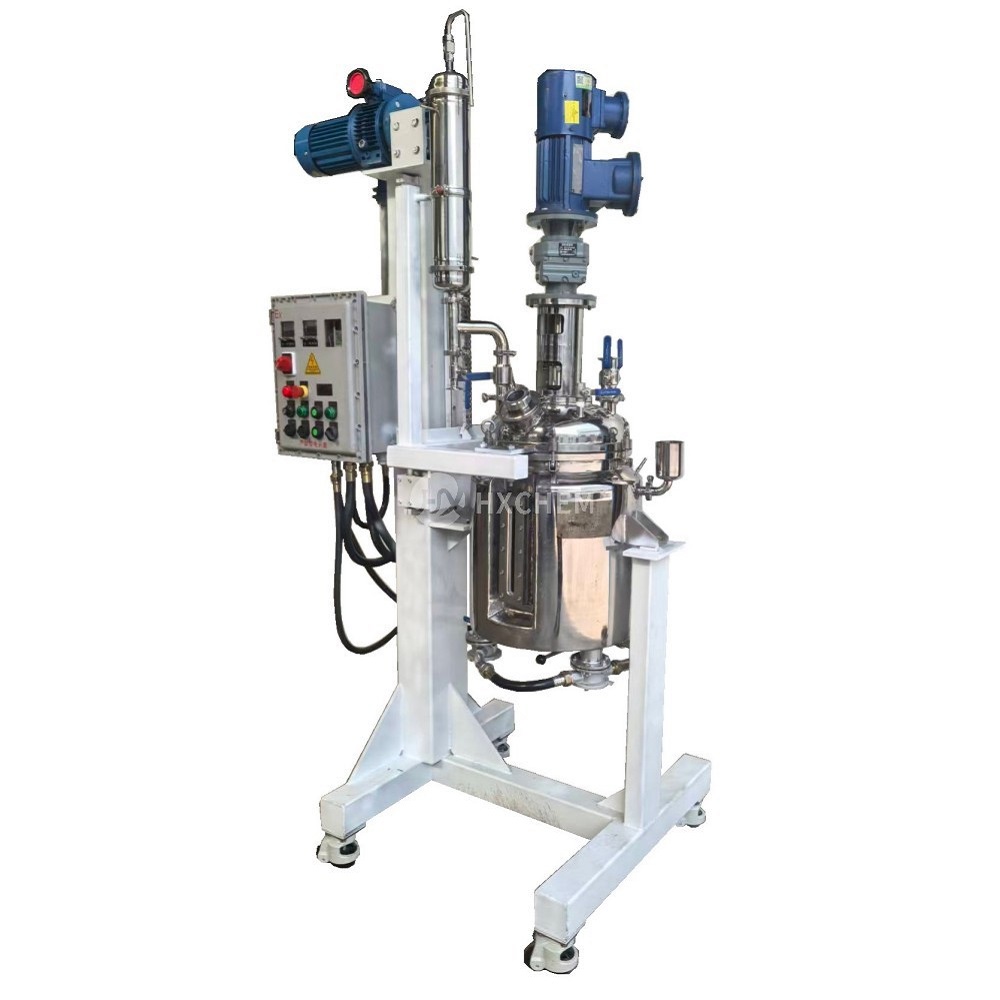
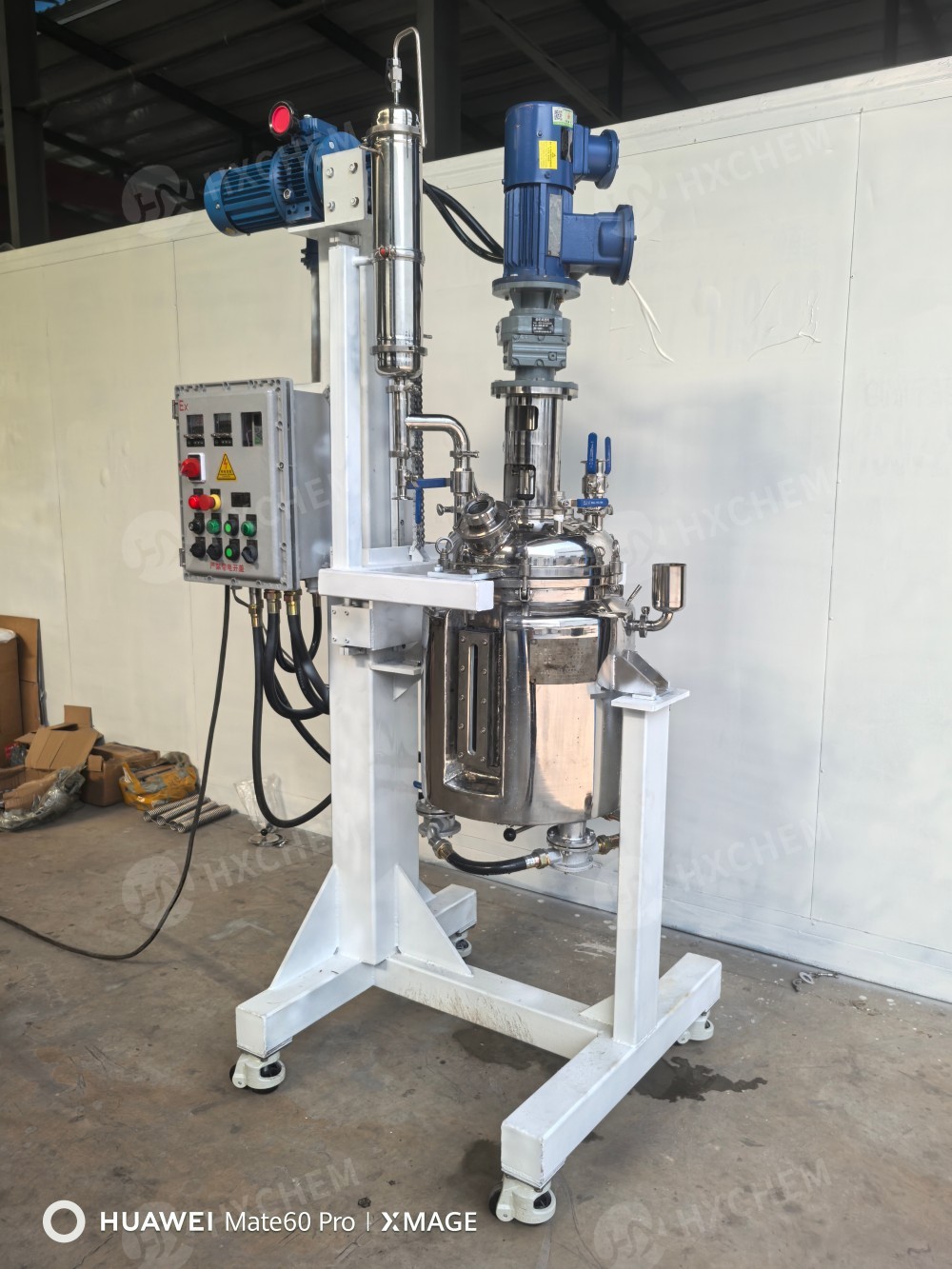
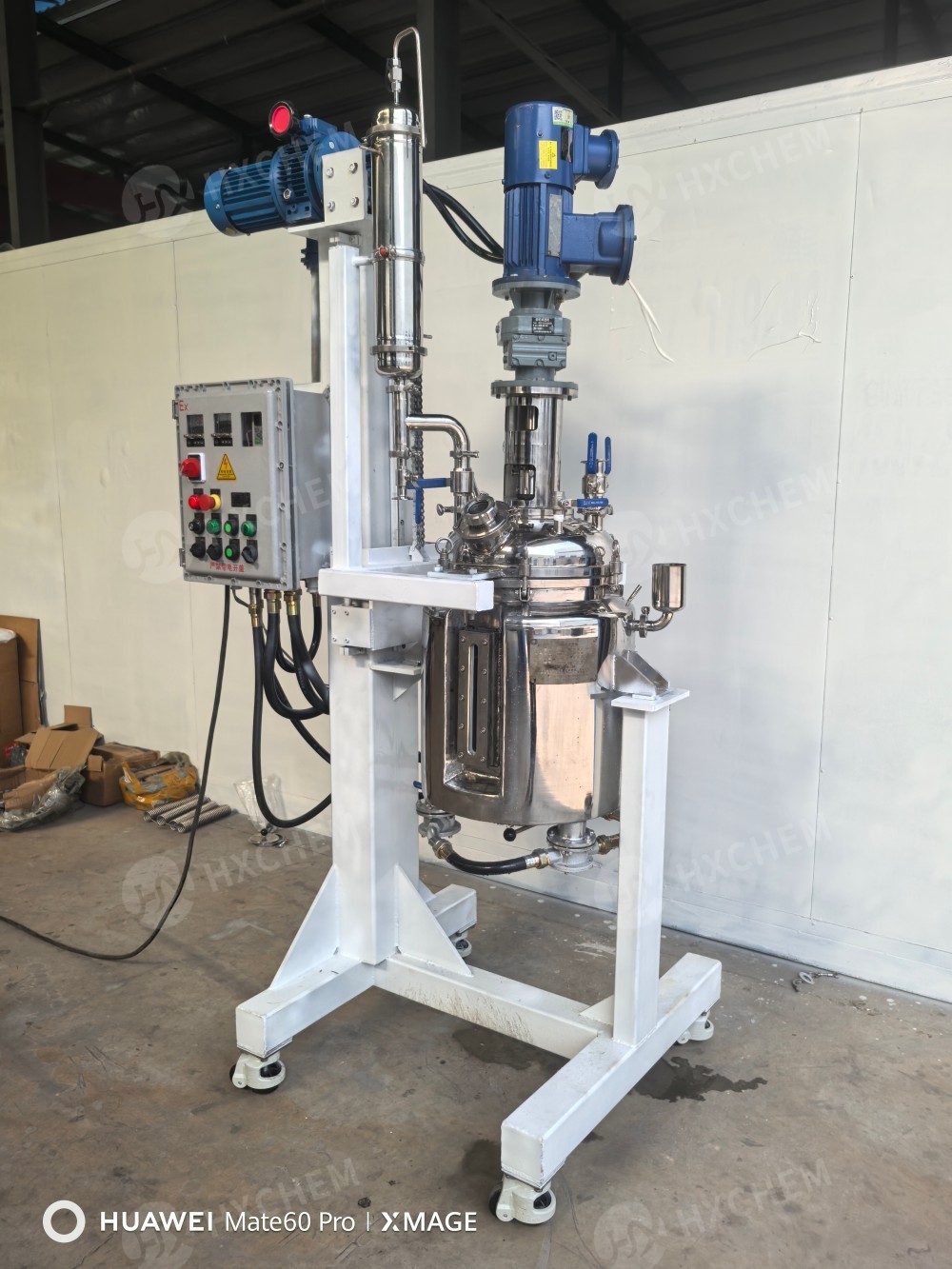
50liters Electric lifting stainless steel laboratory reactor
50liters Electric lifting stainless steel laboratory reactor 10liters/ 20liters/50liters/ 100liters Standard 3bar @200℃ Material:SS304/SS316 stainless steel laboratory reactor; Electric lifting laboratory reactor; 50liters laboratory reactor;50L stainless steel reactor
- HXCHEM
- China
- 40 days after payment
- 40 sets/month
Details
50liters Electric lifting stainless steel laboratory reactor
Introduction
10liters/ 20liters/50liters/ 100liters
Standard Vacuum - 3bar operate pressure
Material:SS304/SS316.
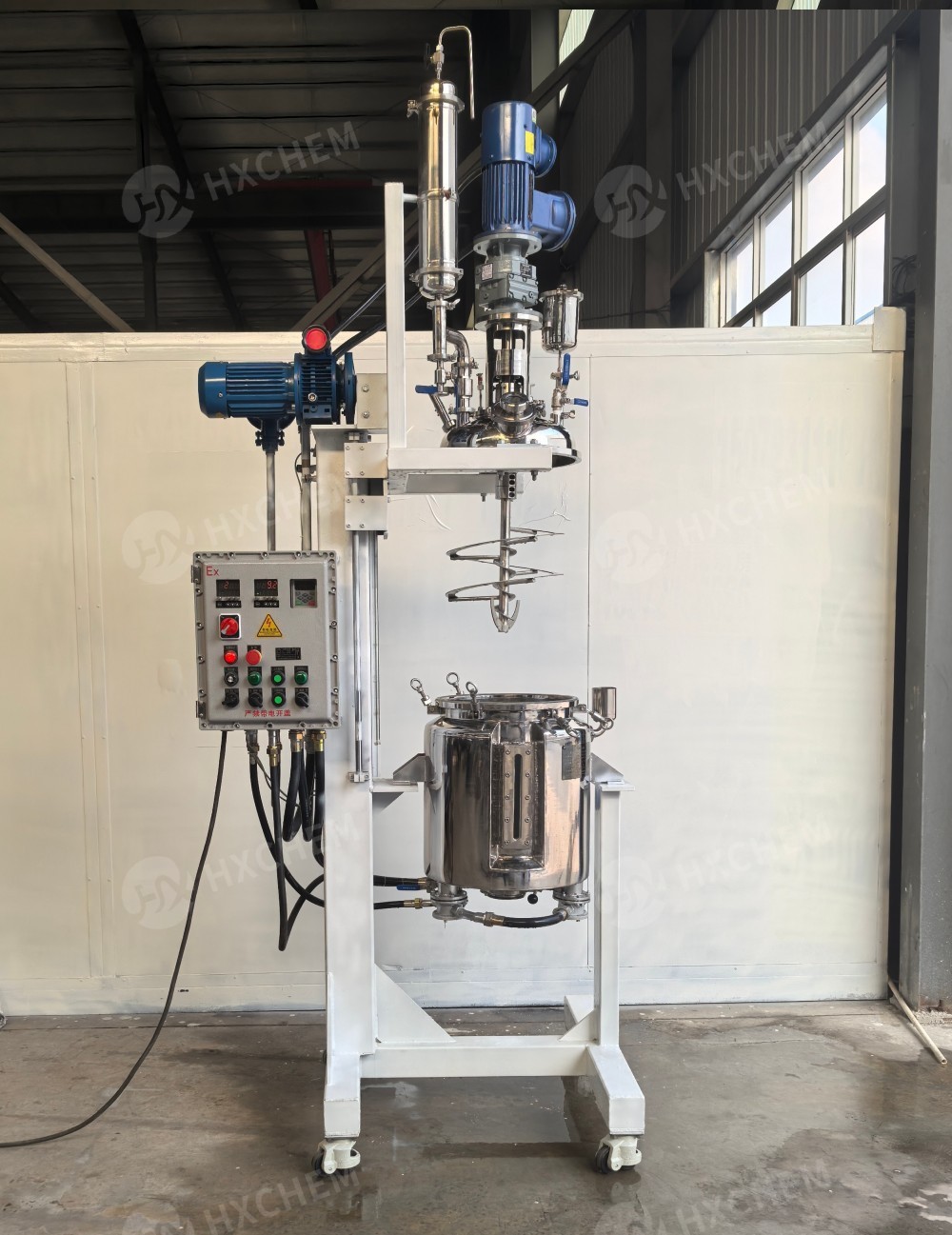
The reactor equipped with electric lifting and lowering device, used for cover lid lifting, cleaning and matenance. This series stirred pressure reactors are used for various applications under pressure including, hydrogenation, polymerization, catalyst screening and corrosion testing.
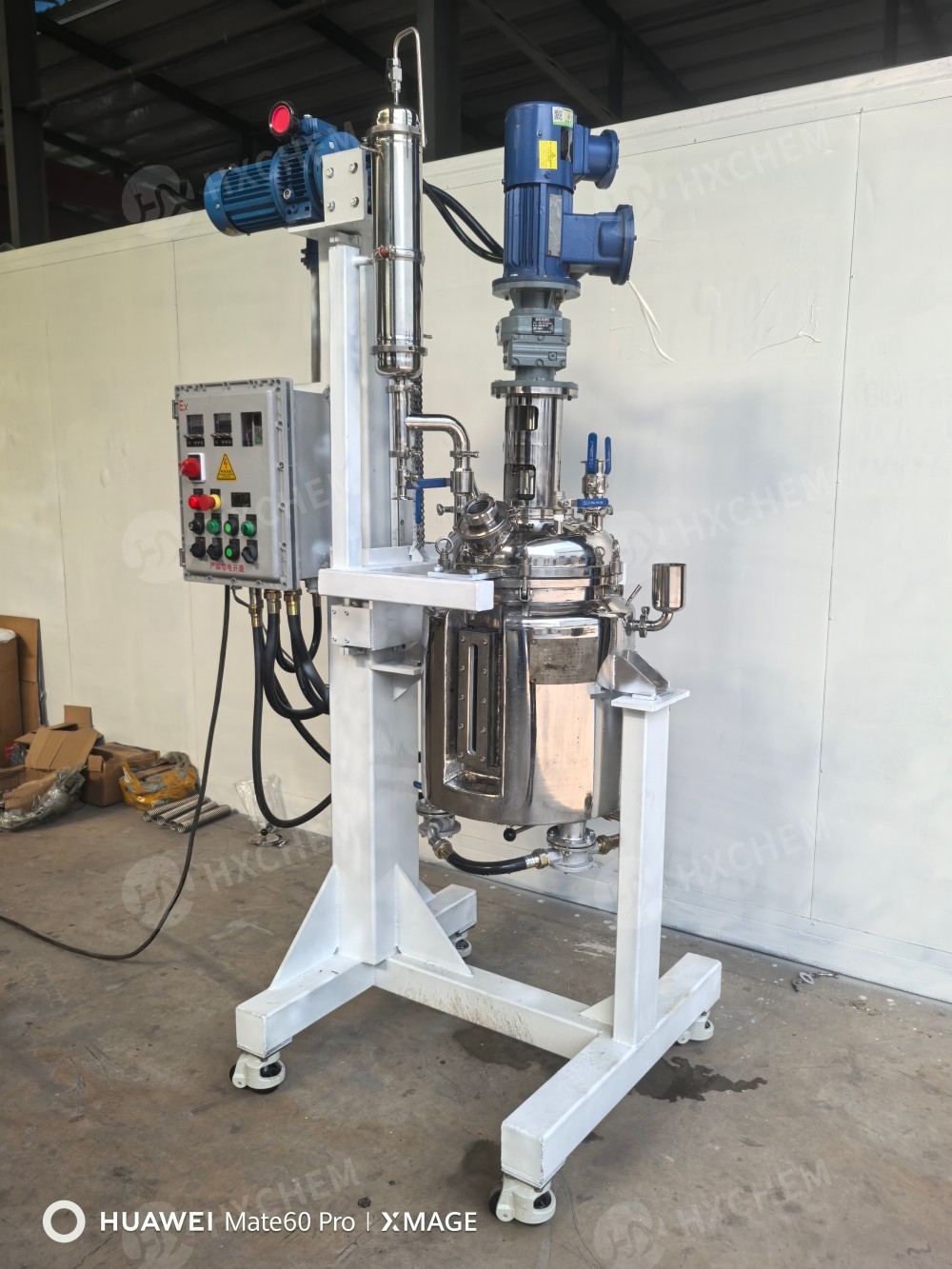
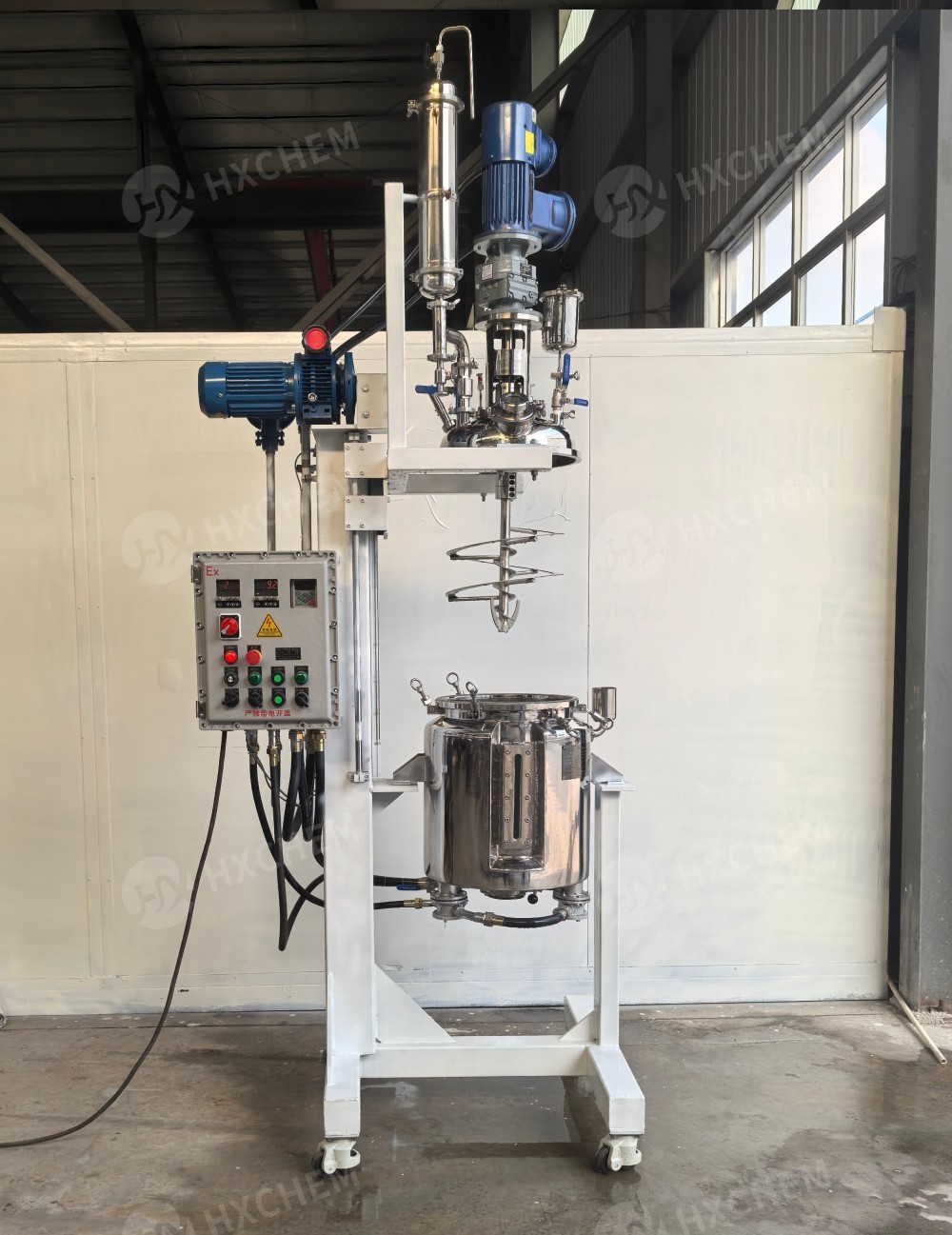
Lab stainless steel reactors/ Electric lifting stainless steel reactor; Electric lifting laboratory reactor; 50liters laboratory reactor;50L stainless steel reactor;
Moveable frame; Explosion proof control cabinet; Glass view window; Oil electric heating; Electric chain lifting and lowering; Double helix impeller design; External vertical condenser & relux;
Product Features
Electric driven for heavy cover lid lifting and lowering;
Volume: 10liters/ 20liters/50liters/ 100liters optional;
Standard vacuum - 3bar pressure operate;
Material:SS304/SS316;
Moveable frame;Glass view window;
Oil electric heating; Electric chain lifting and lowering;
Double helix impeller design;
External vertical condenser & relux;
Explosion proof control cabinet;
Optional: PLC controller, vessel rotation; External horizontal condenser and receiver, vacuum pump, etc.
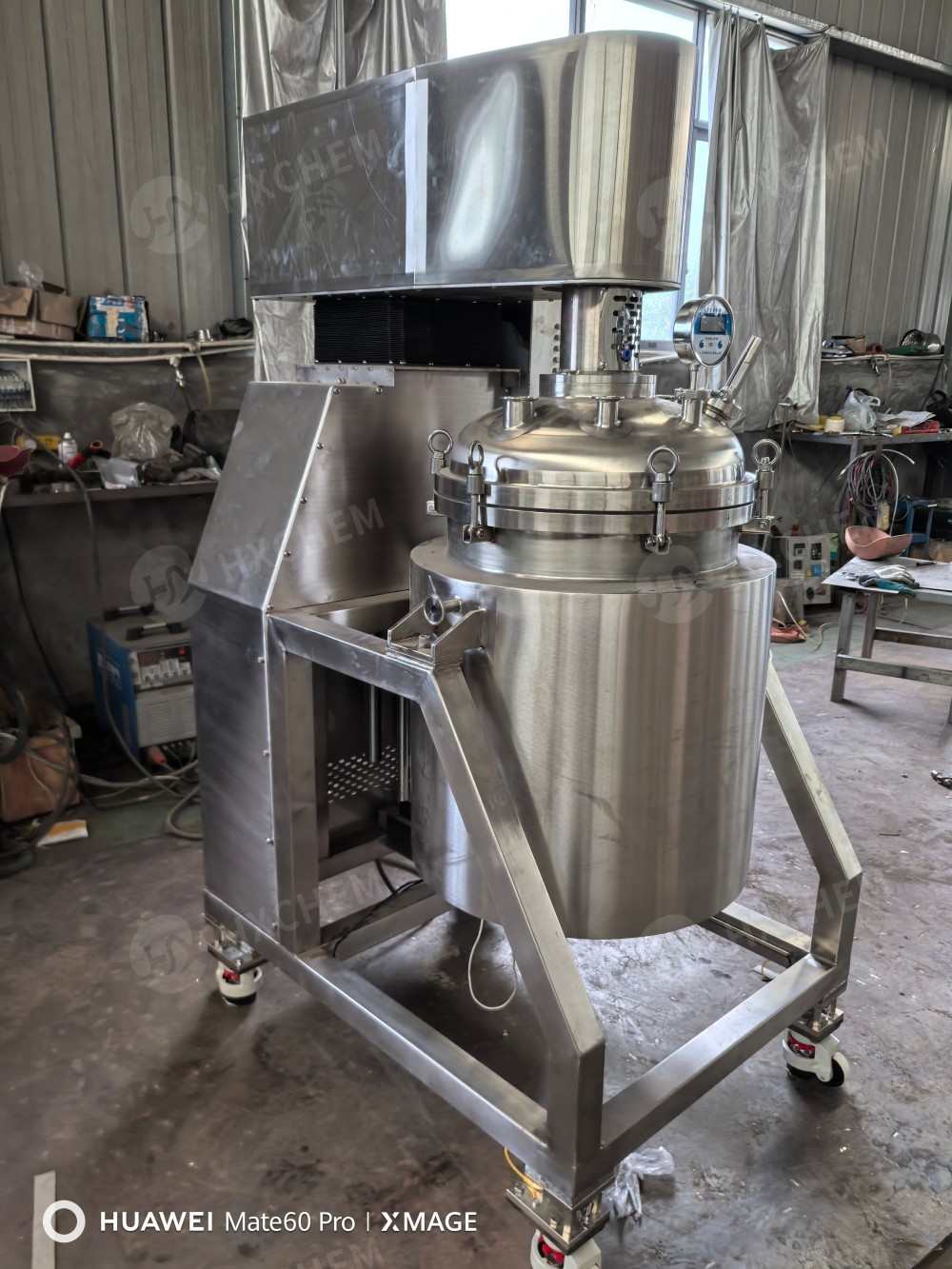
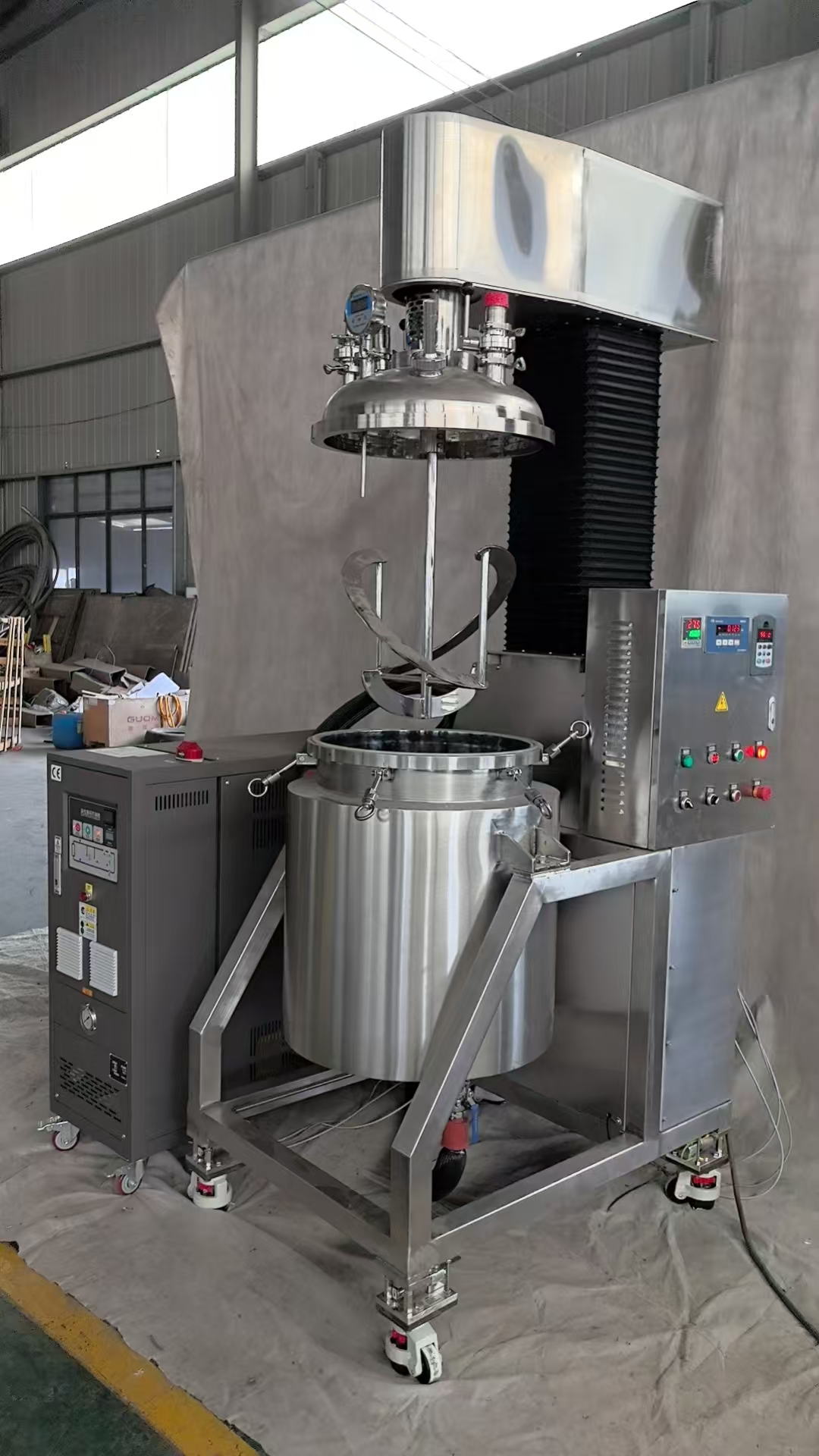
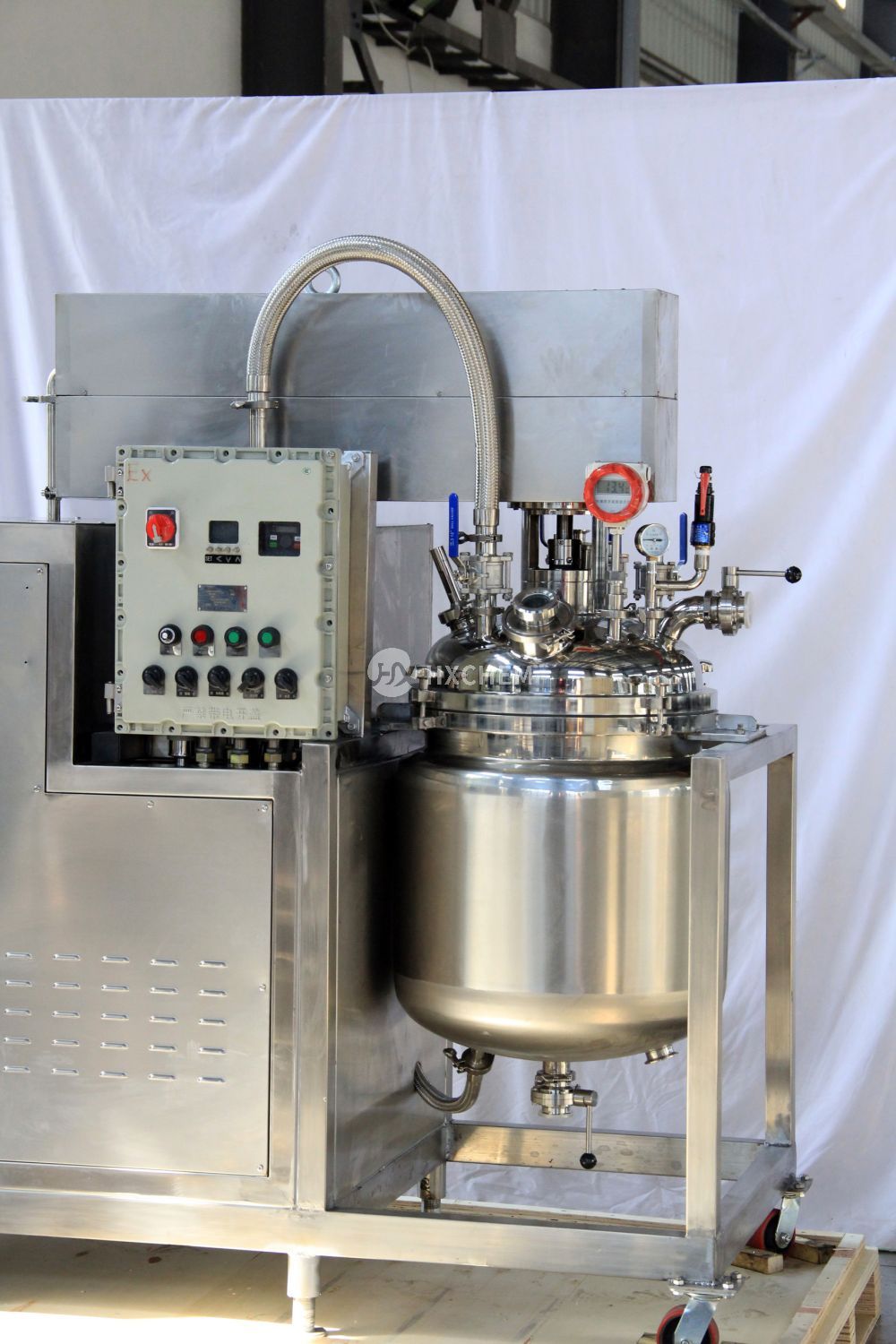
What is an Electric Lifting Stainless Steel Reactor? An electric lifting stainless steel reactor is a versatile piece of industrial equipment used for chemical processes involving mixing, heating, cooling, and reacting of materials. Its defining feature is an electric-powered lifting mechanism that raises and lowers the entire reactor vessel or just the agitator assembly. This design is crucial for easy loading, unloading, and cleaning. Stainless steel (typically grades 304 or 316 for corrosion resistance) is the primary material of construction, making it suitable for a wide range of industries, including food, pharmaceutical, and fine chemicals.
Reactor Vessel: The main body, usually made of 304 or 316L stainless steel. It often has a jacket surrounding it for heating or cooling (using steam, hot oil, or chilled water).
Electric Lifting System: The core feature.
Ease of Use: Effortless operation with a push-button control.
Safety: Eliminates the physical strain and risk of injury from manual lifting.
Stability: Provides controlled, stable, and vertical movement.
Hygiene: Allows for complete access to the vessel interior for thorough cleaning and inspection.
Function: Uses an electric motor and a screw or hydraulic mechanism to smoothly and safely lift the entire vessel or the head assembly.
Advantages over Manual Lifting:
Agitator (Mixing System): Located on the reactor head. Common types include:
Anchor/Paddle: For high-viscosity materials.
Turbine: For high-shear mixing and emulsification.
Propeller: For general mixing of low-viscosity liquids.
Sealing System: A critical component for maintaining a closed environment.
Packing Seal: Simple, economical, suitable for general purposes.
Mechanical Seal: Offers a leak-proof, high-performance seal, essential for vacuum, pressure, or hazardous materials.
Heating and Cooling System: The jacket allows for precise temperature control. Electric heating is common (often with electric heater bands), but steam or thermal oil can also be used.
Control System: Ranges from simple manual controls for temperature and speed to a fully automated PLC (Programmable Logic Controller) system that can store recipes and record data for compliance.